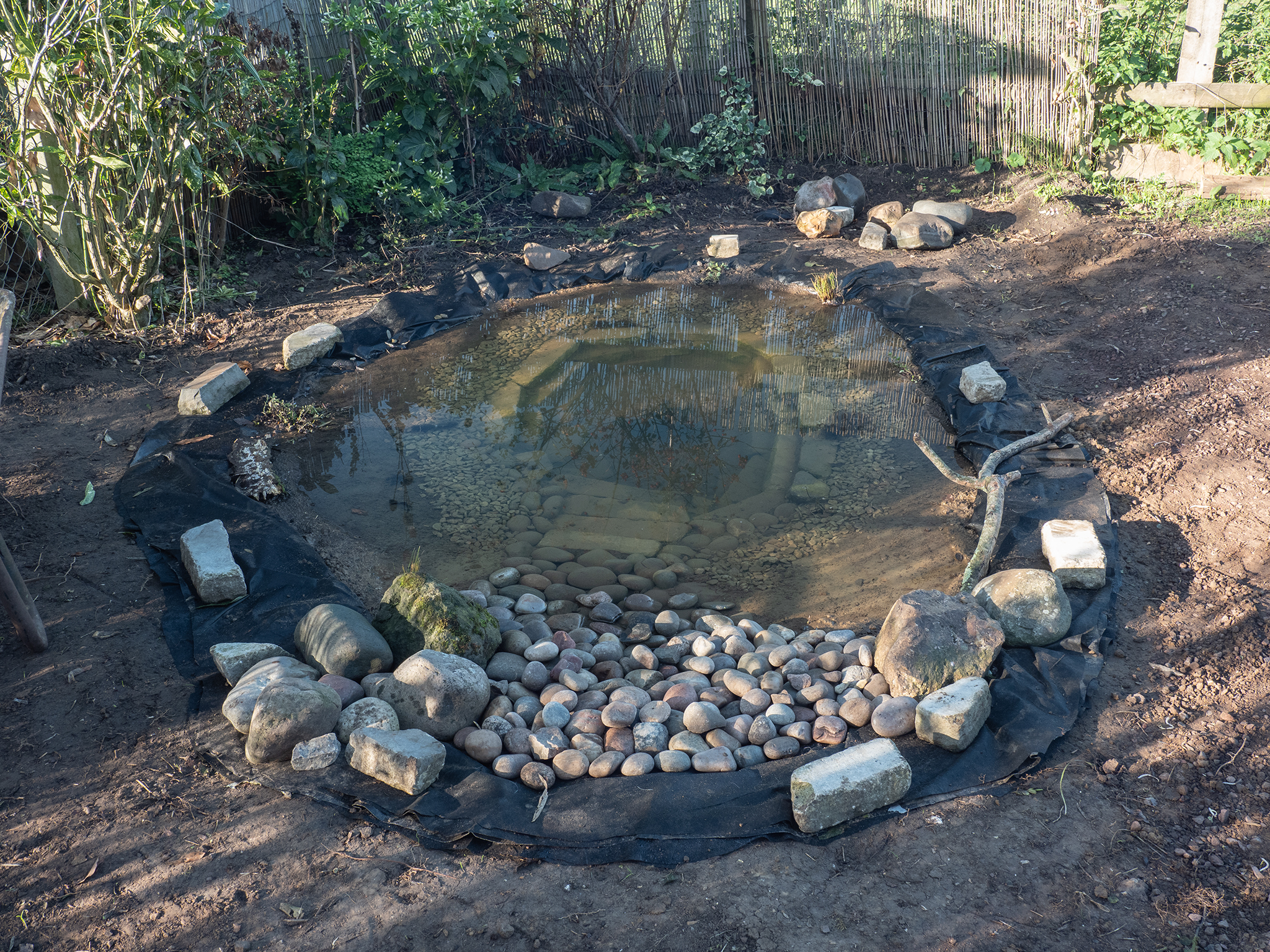
Our garden was looking very sad over the summer what with not being able to work on it during the spring and then the heat and drought so I happened to mention to Rod it would be rather nice to have a wildlife pond at the bottom of the garden. The area lends itself to a pond as it is the lowest part of the garden and a quiet area next to the field. When we first designed the garden it was part of the vegetable garden but we decided that it was too much, I still have a couple of fairly large vegetable plots and a greenhouse in the same area, so we put it down to a rough lawn a few shrubs and a shaded area with Ferns and shade loving plants. I had buried a large plastic barrel in the ground in 2020 as a pond, but it wasn’t that successful. So Rod started planning! We decided we couldn’t dig it by hand ourselves, so we hired a micro digger which Rod soon got the hang of having used one many years ago. While we had the digger we also used it to remove some old shrubs and a couple of ornamental grasses in the garden that were past their best.
As I always do I did some research to see the best way to build it and of course I checked online and found a set of three videos which were very helpful showing the full construction of a small pond from start to finish. Joel Ashton a Landscape Gardener who specialises in Wildlife gardens and ponds, big and small was a great resource as we were designing and constructing the pond, Joel Ashton, YouTube The smallest size he suggested was 2.5 x 2 metres and around 60-90cm depth which would be be just right for the space we had and allow room for planting around the pond.
What I found different about his construction to a basic garden pond was the different layers, I knew there would be and underlay under the liner but with his pool another layer of fleece would be put on top, the deep part lined with rocks to hold the structure and for wildlife to hide and then a layer of subsoil taken from the hole we dug and some from the garden on top of that. Using subsoil was the key as there would be minimal nutrients in it like in topsoil and less chance that the water would go green.
I have also made a pebble beach area to allow any visitors to easily get out of the pond and a watering hole for the birds.
We have finished the basic structure of the pond and it is now full of water but weather and a bout of Covid meant we couldn’t finish round the edges. This will come when the weather improves, perhaps not until the spring as we have some clearing to do in the garden and the vegetable plot has a large heap of topsoil on it which will be distributed throughout the garden. I’ve put some oxygenating plants in the pool and a couple of plants round the pool, but the rest is for the future. The liner will be trimmed and I have plenty of subsoil to finish the top edge and then all the planting etc. will begin.
I’m really looking forward to finishing the pool and will put updates on here and perhaps we may have some overwintering wildlife this year, it’s ready and waiting!